AI-generated faces, voices, and videos are now nearly indistinguishable from reality. Here’s what you need to know — and what to look for.
A video goes viral. A CEO appears to announce the company is filing for bankruptcy. Markets move. Journalists scramble. Except the CEO never said any of it — the video was AI-generated, start to finish, in about 20 minutes.
This isn’t a hypothetical. Versions of this scenario have happened. And in 2026, the tools to create convincing deepfakes are free, fast, and require no technical skill whatsoever.
What exactly is a deepfake?
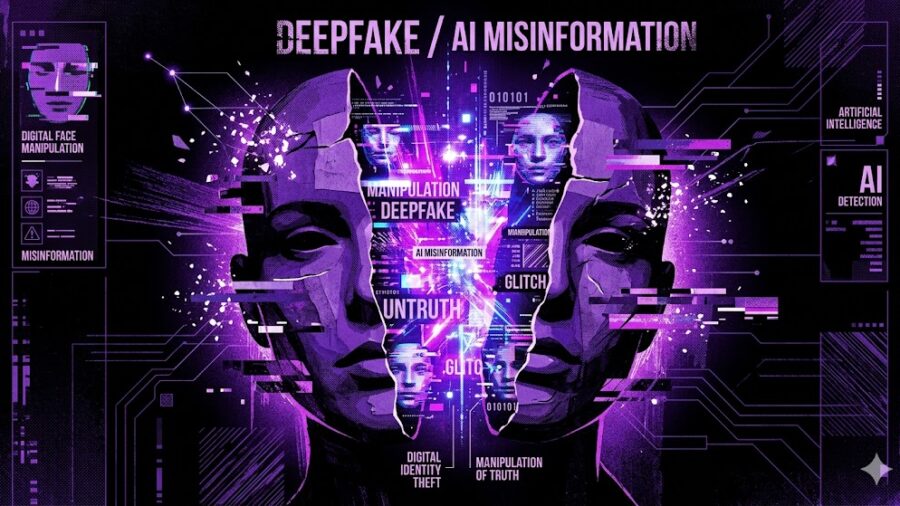
A deepfake is any media — video, audio, image — that has been generated or manipulated by AI to make someone appear to say or do something they never actually did. The term comes from “deep learning” (the AI technique behind it) and “fake.”
The technology isn’t new. What’s new is that it went from requiring a Hollywood studio to requiring a smartphone app.
Early deepfakes were obvious — blurry edges, unnatural blinking, weird lighting. Today’s models can generate photorealistic faces, clone a voice from three seconds of audio, and lip-sync a video with near-perfect accuracy.
How big is the problem?
| 900% increase in deepfake incidents from 2023 to 2025 | $25B estimated financial fraud losses linked to AI voice cloning by 2026 | 96% of deepfake content online targets private individuals, not public figures |
The stakes aren’t just political. Voice cloning scams — where someone impersonates a family member in distress — are among the fastest-growing fraud categories globally. The technology is being weaponised against ordinary people every day.
5 signs you might be looking at a deepfake
- The eyes don’t quite blink rightEarly deepfake models struggled with blinking. Newer ones are better, but still sometimes produce eyes that blink too rarely, too simultaneously, or at unnatural intervals. Watch the eyes for 10–15 seconds.
- Facial edges blur when the head movesLook at the hairline, ears, and jaw during movement. AI-generated faces can produce subtle flickering or soft edges — especially in fast motion — that real footage doesn’t have.
- The lighting doesn’t match the environmentIf the face is brightly lit but the background is dim — or vice versa — with no clear reason, the face may have been composited onto a different background.
- The voice sounds slightly too smoothAI voice clones tend to flatten the micro-variations in natural speech — the hesitations, breath sounds, and tonal shifts that make human voices feel alive. If someone sounds oddly “clean,” trust your instinct.
- The content is convenient for someoneThis is the most underrated signal. Before asking “does this look real?”, ask “who benefits if this is believed?” Deepfakes almost always serve a purpose — financial, political, or reputational.
What can you actually do?
First: slow down. The urgency you feel when watching a shocking video is often by design. Deepfakes are engineered to provoke emotional reactions that short-circuit critical thinking.
Second: verify at the source. If a CEO made a dramatic announcement, it will be on their company’s official channels within minutes. If a politician said something explosive, every major newsroom will be covering it. The absence of corroboration is itself a signal.
Third: use detection tools. Services like Hive Moderation, Sensity AI, and Microsoft’s Video Authenticator can flag AI-generated content with reasonable accuracy — though none are foolproof.
The deeper skill here isn’t technical. It’s epistemic: learning to hold belief loosely until evidence accumulates. In a world where seeing is no longer believing, that might be the most important thing AI is teaching us about ourselves.
The machine can fake almost anything now. What it can’t fake is your skepticism.